Jun 3, 2019
Engine flooded at the first Bedford Festival of Motoring
It's likely to have been the best Bedford Kite Festival yet, with much more on offer than previous years and thousands descending on Russell Park and the Embankment to enjoy the sunshine and attractions.
It was also the first Bedford Festival of Motoring, Canoe Trail were giving people a chance to try canoeing and kayaking and there's a dance tent live until 11pm tonight.
But it was a slip of a handbrake that appears to have caused the highlight for many.
As many cars and people started to head home, one Ford Focus RS owner moved his car to allow some flags anchored under his tyres to be removed.
He apparently said that he leant across to let the handbrake off and the slope was more than he expected.
Naturally gravity kicked in and the car sped down the bank and into the river opposite the Longholme Boat House.
It took a couple of hours for recovery vehicles to lift the customised car, said to be valued at £25,000, but a patient and eager crowd stayed on to watch it rise from the shallow River Great Ouse.
In a classic case of schadenfreude, one bystander, Tom, saw the unfortunate incident unfold: "I couldn't believe what was happening. It's the best entertainment we've ever had, and for free."
No one was said to have been hurt in the incident, although a couple of people on a park bench did have to get out of the way quite quickly.
The car owner also ended up in the river, but was helped out by some friendly kayakers.
The Kite Festival isn't over yet. The dance music tent will be entertaining people until 11pm and then it all starts again on Sunday at 11am with kite displays and activities in Russell Park and more cars along the Embankment.
Apr 29, 2019
Thousands tap into Powassan Maple Syrup Festival
You never know who or what you’ll see at the annual Powassan Maple Syrup Festival.
Chub Nadrofsky walked through the crowd dressed as Sappy, the festival mascot, encouraging people to head down to the Sportsplex to enjoy maple corn on the cob.
"We cook corn on the cob and then you can put maple syrup and butter on it," laughed Nadrofsky.
"I’ve been doing this for about 10 years on and off. You see the kids having fun, and I get to talk to a lot of people. With some people, it is the only time I get to see them."
That kind of good-natured, fun-filled attitude was evident at every turn at the 22nd annual festival.
Despite the early morning cold and flurries, people began arriving at 7 a.m. to enjoy a hearty pancake breakfast, a festival tradition.
By the end of the day, Powassan’s population of 3,200 was expected to swell to somewhere between 8,000 and 10,000.
"It is a great economic boost. It brings a lot of people from out of town and they get to see the great town of Powassan and what it has to offer. They check out the local stores and restaurants, so it is great for the community," explained festival chair Mike Odrowski.
The one-day festival draws people from as far away as London, Windsor, Timmins, and Sault Ste. Marie.
"We’re one of the largest one-day events here in Northern Ontario. Anything north of Barrie, we’re pretty much one of the largest ones," said Odrowski.
Over 150 vendors lined the main street and packed the Sportsplex.
"There is something here for all age groups. We have all kinds of fresh baked goods. Agriculture Canada is here with Maple the cow. Kids get to learn about dairy farming and how to milk a cow. We have the Great Canadian Lumberjack Show again this year, and there is great musical entertainment all day long. There are too many things going on to list," smiled Odrowski.
Six of the vendors were local maple syrup producers.
Lori Costello co-owner of Bella Hill Maple Syrup has been bringing her tasty products to the festival for the past 11 years.
"It is the time of year when it is nice to get outside and usually the weather if fairly nice, although it is cold today. We even got snow this morning. But it is nice to get everyone together and celebrate," said Costello.
"The maple butter tarts are always a hit. We’ve had those for maybe the past five or six years. This year with our syrup, we have the Temagami tart master making maple butter tarts. There’s all different kinds, some with wild blueberries in them too."
For more than two decades the festival has become a spring ritual for families.
"I just like getting out and seeing what everyone has to offer, what they bring. It is just something I’ve done since I was a kid," said Powassan resident Ashley McLeod.
"It is always very friendly and there is always so many people, depending on the weather."
Chub Nadrofsky walked through the crowd dressed as Sappy, the festival mascot, encouraging people to head down to the Sportsplex to enjoy maple corn on the cob.
"We cook corn on the cob and then you can put maple syrup and butter on it," laughed Nadrofsky.
"I’ve been doing this for about 10 years on and off. You see the kids having fun, and I get to talk to a lot of people. With some people, it is the only time I get to see them."
That kind of good-natured, fun-filled attitude was evident at every turn at the 22nd annual festival.
Despite the early morning cold and flurries, people began arriving at 7 a.m. to enjoy a hearty pancake breakfast, a festival tradition.
By the end of the day, Powassan’s population of 3,200 was expected to swell to somewhere between 8,000 and 10,000.
"It is a great economic boost. It brings a lot of people from out of town and they get to see the great town of Powassan and what it has to offer. They check out the local stores and restaurants, so it is great for the community," explained festival chair Mike Odrowski.
The one-day festival draws people from as far away as London, Windsor, Timmins, and Sault Ste. Marie.
"We’re one of the largest one-day events here in Northern Ontario. Anything north of Barrie, we’re pretty much one of the largest ones," said Odrowski.
Over 150 vendors lined the main street and packed the Sportsplex.
"There is something here for all age groups. We have all kinds of fresh baked goods. Agriculture Canada is here with Maple the cow. Kids get to learn about dairy farming and how to milk a cow. We have the Great Canadian Lumberjack Show again this year, and there is great musical entertainment all day long. There are too many things going on to list," smiled Odrowski.
Six of the vendors were local maple syrup producers.
Lori Costello co-owner of Bella Hill Maple Syrup has been bringing her tasty products to the festival for the past 11 years.
"It is the time of year when it is nice to get outside and usually the weather if fairly nice, although it is cold today. We even got snow this morning. But it is nice to get everyone together and celebrate," said Costello.
"The maple butter tarts are always a hit. We’ve had those for maybe the past five or six years. This year with our syrup, we have the Temagami tart master making maple butter tarts. There’s all different kinds, some with wild blueberries in them too."
For more than two decades the festival has become a spring ritual for families.
"I just like getting out and seeing what everyone has to offer, what they bring. It is just something I’ve done since I was a kid," said Powassan resident Ashley McLeod.
"It is always very friendly and there is always so many people, depending on the weather."
Feb 28, 2019
Snow won't stop Stratford Garden Festival from sprouting
Even a significant amount of snowfall won't stop the Stratford Garden Festival from sprouting.
The 19th edition of the spring- and plant-themed event, presented by the Lung Association of Ontario, starts Thursday at the Rotary Complex and continues through the weekend. Despite several centimetres of precipitation falling Wednesday Janeen Collins-Dera, the lung association's community engagement co-ordinator for this region, said about 70 per cent of the gardens were already in place.
"It's all coming together beautifully," she said from the Rotary Complex with various vendors busy setting up in the background.
Tracy Brennan, the organization's manager of community engagement for this area, said the event serves as a reminder that "spring is just around the corner." The pair pointed out the festival appeals to gardening enthusiasts while also showcasing local talent.
"This is a very creative community and it's a chance for our landscapers to take a lead and work collaboratively together to create this festival," Brennan said. "We've got a wonderful array of gardening experts."
She added it offers a chance to glean some tips in a no-pressure environment.
"You get to dream a little bit," she said.
A long list of featured speakers is headlined by Mark Cullen and son Ben, who will be taking control of the podium Friday and Saturday at 12:30 p.m., respectively. They will both be speaking on their latest book Escape to Reality: How the World is Changing Gardening, and Gardening is Changing the World. Local speakers such as Jim Fitzgerald and Marty Klomp are also part of the 20-plus person lineup.
The event kicks off at noon Thursday and runs until 5 p.m. punctuated with an afternoon seniors' tea.
"A beloved community event," Brennan said. "When they come in and pay their admission they get a free coffee and a little biscuit."
It continues 10 a.m. to 5 p.m. both Friday and Saturday and concludes 11 a.m. to 5 p.m. Sunday.
As for the lung aspect, Brennan said one in five Canadians have lung disease.
"And five out of five of us need to breathe," she said.
This local event has raised over $1 million for research and programs since its inception.
"It's pretty amazing," she said.
Local lung health support and exercise groups will be launched soon, Brennan said.
This year's theme is urban agriculture and small space gardening. Admission is $10 while children under age 12 get in free.
The 19th edition of the spring- and plant-themed event, presented by the Lung Association of Ontario, starts Thursday at the Rotary Complex and continues through the weekend. Despite several centimetres of precipitation falling Wednesday Janeen Collins-Dera, the lung association's community engagement co-ordinator for this region, said about 70 per cent of the gardens were already in place.
"It's all coming together beautifully," she said from the Rotary Complex with various vendors busy setting up in the background.
Tracy Brennan, the organization's manager of community engagement for this area, said the event serves as a reminder that "spring is just around the corner." The pair pointed out the festival appeals to gardening enthusiasts while also showcasing local talent.
"This is a very creative community and it's a chance for our landscapers to take a lead and work collaboratively together to create this festival," Brennan said. "We've got a wonderful array of gardening experts."
She added it offers a chance to glean some tips in a no-pressure environment.
"You get to dream a little bit," she said.
A long list of featured speakers is headlined by Mark Cullen and son Ben, who will be taking control of the podium Friday and Saturday at 12:30 p.m., respectively. They will both be speaking on their latest book Escape to Reality: How the World is Changing Gardening, and Gardening is Changing the World. Local speakers such as Jim Fitzgerald and Marty Klomp are also part of the 20-plus person lineup.
The event kicks off at noon Thursday and runs until 5 p.m. punctuated with an afternoon seniors' tea.
"A beloved community event," Brennan said. "When they come in and pay their admission they get a free coffee and a little biscuit."
It continues 10 a.m. to 5 p.m. both Friday and Saturday and concludes 11 a.m. to 5 p.m. Sunday.
As for the lung aspect, Brennan said one in five Canadians have lung disease.
"And five out of five of us need to breathe," she said.
This local event has raised over $1 million for research and programs since its inception.
"It's pretty amazing," she said.
Local lung health support and exercise groups will be launched soon, Brennan said.
This year's theme is urban agriculture and small space gardening. Admission is $10 while children under age 12 get in free.
Jan 13, 2019
Welsh farmstead is rare medieval hall house, experts confirm
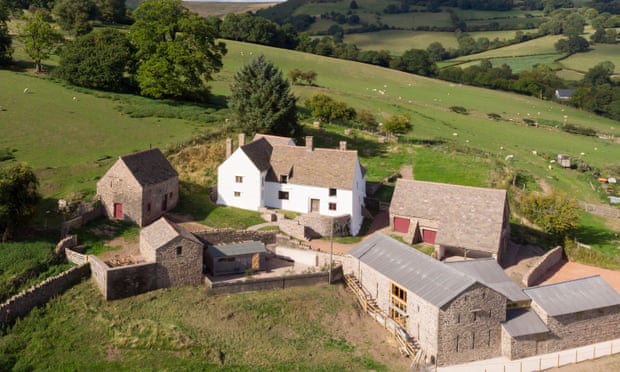
A Welsh farmhouse that was once in such poor condition that rainwater ran through its rooms is in fact an exceptionally rare 600-year-old medieval hall house, it has been confirmed, after conservation experts used a groundbreaking new dating technique originally developed by climate change scientists.
Llwyn Celyn, which lies in the Black Mountains on the border of England and Wales, was completed in 1420, an analysis of its timbers found, making it one of only a tiny number of domestic buildings to survive from one of the most destructive periods in Welsh history, immediately following the failed revolt of the Welsh prince Owain Glyndŵr.
Conservation experts from the Landmark Trust, who first encountered the building in a perilous state of disrepair but still inhabited by two farmers in 2007, initially believed it dated from much later in the 15th century. But repeated attempts to date its ancient timbers with tree ring analysis failed, in part because the technique is less effective on trees that have grown in a wet climate.
Instead, they turned to a technique developed in the geography department at Swansea University. Never before used on an undated historic building, it analyses the oxygen, hydrogen and carbon isotopes preserved within the cellulose of a tree’s rings to determine the climate conditions in which the tree grew.
Each ring has a distinctive isotope signal, which can be used to determine very precisely the age of the timber, even on samples that would be undateable by conventional methods.
The new technique will potentially be "transformative" for the dating of historic buildings and timbers back to the arrival of the Romans, and potentially into the Bronze Age, according to Neil Loader, a professor of geography at the university.
Llwyn Celyn, which lies in the Black Mountains on the border of England and Wales, was completed in 1420, an analysis of its timbers found, making it one of only a tiny number of domestic buildings to survive from one of the most destructive periods in Welsh history, immediately following the failed revolt of the Welsh prince Owain Glyndŵr.
Conservation experts from the Landmark Trust, who first encountered the building in a perilous state of disrepair but still inhabited by two farmers in 2007, initially believed it dated from much later in the 15th century. But repeated attempts to date its ancient timbers with tree ring analysis failed, in part because the technique is less effective on trees that have grown in a wet climate.
Instead, they turned to a technique developed in the geography department at Swansea University. Never before used on an undated historic building, it analyses the oxygen, hydrogen and carbon isotopes preserved within the cellulose of a tree’s rings to determine the climate conditions in which the tree grew.
Each ring has a distinctive isotope signal, which can be used to determine very precisely the age of the timber, even on samples that would be undateable by conventional methods.
The new technique will potentially be "transformative" for the dating of historic buildings and timbers back to the arrival of the Romans, and potentially into the Bronze Age, according to Neil Loader, a professor of geography at the university.
Dec 10, 2018
Mind-blowingly gorgeous Georgia
We are on the midnight plane to Georgia. In various stages of inebriation, me and Dave WhatsApp this to our grown-up children. It's not our fault. Nothing ever is. Our Georgian Airways flight, the last one out of Gatwick, is delayed. What else is there to do but dutiful duty free?
Dave is my compadre, the finest travelling companion a woman could wish for. The best thing about her is that she will go absolutely anywhere but also has no idea where anywhere is. Except France – which she has taken against to such an extent that even French people speaking French near her makes her extremely annoyed. She can sniff out pretension at 100km, not that she knows what a kilometre is. And God help anyone she calls "piss-elegant".
Suffice to say, when we arrive in Tbilisi, I have to prod her awake and try to enthuse her, though I feel very rough myself. "All airports are the same. Why are we even here?" she asks.
We are in Georgia mostly, I remind her, because she loves post-Soviet places and last year when I was in Armenia to do a story, everyone kept saying: "Don't go to Georgia. There are big men with swords there who will kill you." So it's a must.
We arrive at Rooms Hotel in Tbilisi, a former Soviet-era publishing and printing house. I should say we partake of the city's immense cultural riches, but we go to bed and order burgers and chips on room service because we know how to live. When we come to, we realise we are actually in a completely fantastic place.
Dave is my compadre, the finest travelling companion a woman could wish for. The best thing about her is that she will go absolutely anywhere but also has no idea where anywhere is. Except France – which she has taken against to such an extent that even French people speaking French near her makes her extremely annoyed. She can sniff out pretension at 100km, not that she knows what a kilometre is. And God help anyone she calls "piss-elegant".
Suffice to say, when we arrive in Tbilisi, I have to prod her awake and try to enthuse her, though I feel very rough myself. "All airports are the same. Why are we even here?" she asks.
We are in Georgia mostly, I remind her, because she loves post-Soviet places and last year when I was in Armenia to do a story, everyone kept saying: "Don't go to Georgia. There are big men with swords there who will kill you." So it's a must.
We arrive at Rooms Hotel in Tbilisi, a former Soviet-era publishing and printing house. I should say we partake of the city's immense cultural riches, but we go to bed and order burgers and chips on room service because we know how to live. When we come to, we realise we are actually in a completely fantastic place.
Nov 9, 2018
Beachcombers de luxe on the Kent coast
In Wendy Aldridge's Ramsgate home, the decor drops a few subtle hints to its coastal setting, but that's not really the main aim. Yes, there are paintings of skeletal fish and sailing boats and a Curtis Jeré wall sculpture depicting birds in flight. But it bears only a passing resemblance to the local gulls, which tend to loiter on street corners rather than fly in picturesque formations.
Wendy never aimed to create a sugar-sweet version of seaside style in this flat, which she renovated with her husband, James. "We wanted to include a few reminders that the sea is just outside the front door, but without being too obvious," she says. Instead, she has mixed 1970s, mid-century and contemporary designs together to create a less clichéd coastal look.
The couple, parents to Ida, eight, and Arlie, five, bought this basement flat two and a half years ago. They initially tried to buy in Margate but then looked five miles south to Ramsgate. No Turner Contemporary or Tracey Emin neons here, but there is a nice beach and some interesting architecture, including sea-facing Victorian townhouses, long since carved up into flats and bedsits.
This flat had been rented out for many years, so wasn't in the best shape, but two rooms had been knocked into one big space at the front. "This meant we could immediately imagine how it would work for us as a family," says Wendy.
Originally, this run of rooms would have been dedicated to serving a Victorian family on the floors above. Wendy fully embraced the flat's below-stairs vibe with dark paint colours, offset with glossy white tiling, flashes of gold and warm-toned mid-century furniture.
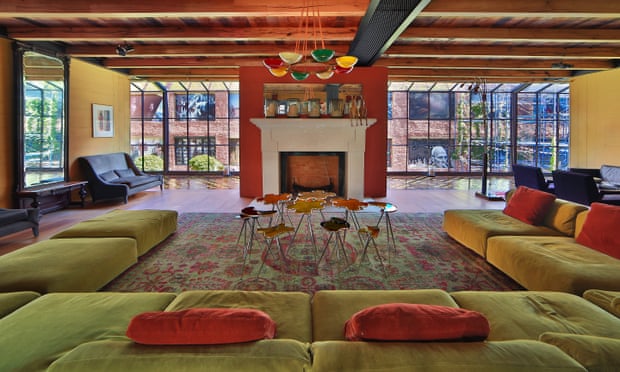
Then there's the centrepiece sofa – a louche 1970s number in sage-green velvet that was shipped over from Italy. "It's so low-slung, you literally sink into it," says Wendy. "I like to imagine it having a very glamorous life before it came to us, in a nightclub or a chic apartment," she adds. As if proof of its partying past, the upholstery bears the odd cigarette burn. "I'd never replace that velvet, so they'll remain as part of its character."
Facing it is a leather sofa by the Brazilian designer Percival Lafer, which almost qualifies as an impulse buy. "James went to pick up a chair and the guy was also thinking of selling his sofa. James rang to ask what I thought. I said, ‘If you can squeeze it into the car, go for it.' It fitted in by a whisker."
Wendy never aimed to create a sugar-sweet version of seaside style in this flat, which she renovated with her husband, James. "We wanted to include a few reminders that the sea is just outside the front door, but without being too obvious," she says. Instead, she has mixed 1970s, mid-century and contemporary designs together to create a less clichéd coastal look.
The couple, parents to Ida, eight, and Arlie, five, bought this basement flat two and a half years ago. They initially tried to buy in Margate but then looked five miles south to Ramsgate. No Turner Contemporary or Tracey Emin neons here, but there is a nice beach and some interesting architecture, including sea-facing Victorian townhouses, long since carved up into flats and bedsits.
This flat had been rented out for many years, so wasn't in the best shape, but two rooms had been knocked into one big space at the front. "This meant we could immediately imagine how it would work for us as a family," says Wendy.
Originally, this run of rooms would have been dedicated to serving a Victorian family on the floors above. Wendy fully embraced the flat's below-stairs vibe with dark paint colours, offset with glossy white tiling, flashes of gold and warm-toned mid-century furniture.
Then there's the centrepiece sofa – a louche 1970s number in sage-green velvet that was shipped over from Italy. "It's so low-slung, you literally sink into it," says Wendy. "I like to imagine it having a very glamorous life before it came to us, in a nightclub or a chic apartment," she adds. As if proof of its partying past, the upholstery bears the odd cigarette burn. "I'd never replace that velvet, so they'll remain as part of its character."
Facing it is a leather sofa by the Brazilian designer Percival Lafer, which almost qualifies as an impulse buy. "James went to pick up a chair and the guy was also thinking of selling his sofa. James rang to ask what I thought. I said, ‘If you can squeeze it into the car, go for it.' It fitted in by a whisker."
Oct 22, 2018
Can’t sleep? Perhaps you’re overtired
Nerina Ramlakhan remembers when her daughter was a toddler, and how if she got too tired she would be unable to switch off. "There was a healthy level of tiredness," she says. "But if she went beyond that, she would be running on a kind of false energy. And then she wouldn't be able to switch off when she went to bed."
Overtiredness is recognised the world over in young children – but it is seemingly more and more common in adults. Dr Ramlakhan should know: she is a sleep psychologist and is increasingly seeing people who remind her of her little girl when she was younger.
There's certainly an irony that in our sophisticated, hi-tech, busy world we appear to be reverting to behaviour that we recognise and know how to treat in kids, but are somehow failing to deal with as adults. Overtiredness, sleep experts agree, is down to our always-on existence. In the past, says Ramlakhan, the author of The Little Book of Sleep, our days had naturally built-in downtime that gave us short snatches of rest. Today, that has disappeared for many of us. "We have become restless as a society – and that places more demands on us when we get into bed at night," she says. "We have lost the rituals and practices that gave us little respites during the day. In the past, you would go to the supermarket and, while you were waiting in the queue, you'd daydream, be a bit bored, look around. Now, any window like that will be filled by looking at your phone, answering some emails, sorting out your Amazon account."
You may think you are putting the time to good use – but that's not how your brain interprets it. There's a complex neurophysiology that requires breaks in tasks and concentration; if it's constantly bombarded, the brain becomes overloaded. The result, says Ramlakhan, is that it goes into what we might call survival mode: it assumes that something bad is about to happen, it ups the adrenaline and it puts out an urgent call for sugary snacks to provide quick-release energy.
And there's more: if your brain has become tuned to always reaching for the next thing to do, to never taking a moment to just pause and rest, then it will gradually become harder and harder to switch off at night. It's almost as if we're losing the ability to let go; and the biggest letting-go of all is falling asleep, which Ramlakhan describes as an act of trust. "There's a growing tendency to hold on, to keep on going, and it's manifesting in our sleep patterns as well. People say to me that they feel they're on the edge of sleep all night. They're getting up in the morning feeling exhausted. They say they keep waking up at night and can't get back to sleep. But it's normal to wake up at night; most of the time, we just go back to sleep."
Overtiredness is recognised the world over in young children – but it is seemingly more and more common in adults. Dr Ramlakhan should know: she is a sleep psychologist and is increasingly seeing people who remind her of her little girl when she was younger.
There's certainly an irony that in our sophisticated, hi-tech, busy world we appear to be reverting to behaviour that we recognise and know how to treat in kids, but are somehow failing to deal with as adults. Overtiredness, sleep experts agree, is down to our always-on existence. In the past, says Ramlakhan, the author of The Little Book of Sleep, our days had naturally built-in downtime that gave us short snatches of rest. Today, that has disappeared for many of us. "We have become restless as a society – and that places more demands on us when we get into bed at night," she says. "We have lost the rituals and practices that gave us little respites during the day. In the past, you would go to the supermarket and, while you were waiting in the queue, you'd daydream, be a bit bored, look around. Now, any window like that will be filled by looking at your phone, answering some emails, sorting out your Amazon account."
You may think you are putting the time to good use – but that's not how your brain interprets it. There's a complex neurophysiology that requires breaks in tasks and concentration; if it's constantly bombarded, the brain becomes overloaded. The result, says Ramlakhan, is that it goes into what we might call survival mode: it assumes that something bad is about to happen, it ups the adrenaline and it puts out an urgent call for sugary snacks to provide quick-release energy.
And there's more: if your brain has become tuned to always reaching for the next thing to do, to never taking a moment to just pause and rest, then it will gradually become harder and harder to switch off at night. It's almost as if we're losing the ability to let go; and the biggest letting-go of all is falling asleep, which Ramlakhan describes as an act of trust. "There's a growing tendency to hold on, to keep on going, and it's manifesting in our sleep patterns as well. People say to me that they feel they're on the edge of sleep all night. They're getting up in the morning feeling exhausted. They say they keep waking up at night and can't get back to sleep. But it's normal to wake up at night; most of the time, we just go back to sleep."
Subscribe to:
Posts (Atom)