May 28, 2012

Ancient Chinese Began To Celebrate The Double Ninth Festival Long Time Ago


The Double Ninth Festival
The 9th day of the 9th lunar month is the traditional Chongyang Festival, or Double Ninth Festival. It usually falls in October in the Gregorian calendar. In an ancient and mysterious book Yi Jing, or The Book of Changes, number "6" was thought to be of Yincharacter, meaning feminine or negative, while number "9" was thought to be Yang, meaning masculine or positive. So the number nine in both month and day create the Double Ninth Festival, or Chongyang Festival. Chong in Chinese means "double." Also, as double ninth was pronounced the same as the word to signify "forever", both are "Jiu Jiu," the Chinese ancestors considered it an auspicious day worth celebration. That's why ancient Chinese began to celebrate this festival long time ago.

The Double Ninth Festival, also known as Chongyang Festival, is held on the ninth day of the ninth lunar month. It is also known as the Senior Citizens’ Festival. According to records from the mysterious book Yi Jing, the number 6 belonged to the Yin character while the number 9 was thought to be of the Yang character. So, on the ninth day of the ninth lunar month, both day and month are Yang characters. Therefore, the festival was named the Double Ninth Festival. In ancient times, people believed that the double ninth day was worth a celebration. Since folk people had the tradition of climbing a mountain on that day, the Chongyang Festival is also called the Height Ascending Festival. The Chongyang Festival also has other names, such as the Chrysanthemum Festival. As “double ninth” is pronounced the same as the word meaning “forever,” ancestors are also worshipped on that day.

The festival is based on the theory of Yin and Yang, the two opposing principles in nature. Yin is feminine, negative principle, while Yang is masculine and positive. The ancients believed that all natural phenomena could be esplained by this theory. Numbers are related to this theory. Even numbers belong to Yin and odd numbers to Yang. The ninth day of the ninth lunar month is a day when the two Yang numbers meet. So it is called Chongyang. Chong means double in Chinese.Chongyang has been an important festival since ancient times.

The festival is held in the golden season of autumn, at harvest -time. The bright clear weather and the joy of bringing in the harvest make for a festive happy atmosphere.The Double Ninth Festival is usually perfect for outdoor activities. Many people go hiking and climbing in the country, enjoying Mother Natures final burst of color before she puts on her dull winter cloak. Some will carry a spray of dogwood.
It is hard to say when these customs were created. But there are many stories which are closely related. The book Xu Qi Xie Ji ,written by Wu Jun in the sixth century has one such story. In ancient times, there lived a man named Huan Jing. He was learning the magic arts from Fei Changfang, who had become an immortal after many years of practicing Taoism. One day, the two were climbing a muntain. Fei Changfang suddenly stopped and looked very upset. He told Huan Jing,On the ninth day of the ninth month, disaster will come to your hometown. You must go home immediately. Remember to make a red bag for each one of your family members and put a spray of dogwood in every one. Then you must all tie your bags to your arms, leave home quickly and climb to the top of a mountain. Most importantly, you must all drink some chrysanthemum wine. Only by doing so can your family avoid this disaster.

Things Chinese Do in Double Ninth Festival – Chinese Folklore

As mentioned above, on Chongyang Festival, people climb a high mountain drink chrysanthemum wine, and wear Cornus leaves in order to protect themselves from danger and evil. Also on this holiday, some Chinese also visit the graves of their ancestors to pay their respects.

Indeed, the Double Ninth Festival may have started out as a day to drive away danger, but like the Chinese New Year, over time it has become a day of celebration. In contemporary times it is an occasion for hiking and chrysanthemum appreciation.

Most people drink chrysanthemum tea, while a few strict traditionalists drink homemade chrysanthemum wine. Children in school learn poems about chrysanthemums, and many localities host a chrysanthemum exhibition. Mountain climbing races are also popular; winners get to wear made of cornus.

Origin of Double Ninth Festival – Chinese Folklore

The Double Ninth Festival, also named Chongyang Festival, falls on the ninth day of the ninth month of the Chinese lunar calendar, hence it gets the name of Double Ninth Festival.

Chong means double and yang represents active, masculine. According to the traditional Chinese theory of yin and yang, both the 9th month and the 9th day of the month belong to yang, so is the name “Chongyang.

May 7, 2012

Want To Know What The Big Deal About Groundhog Day Is?


Groundhog Day
A tradition that has been celebrated in North America and Canada for years, since the 1800s to give you an idea, that is what Groundhog Day is all about. It is celebrated with a lot of color, cleaning and celebration in New York and Pennsylvania on February 2nd. You can even have an anticipation-spring party if you want to have some fun.

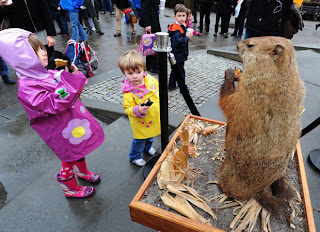
So what happens on February 2nd every year? A woodchuck, groundhog, ground squirrel or marmot comes out of its burrow and checks for its shadow. If it sees a shadow it will go back into its burrow for 6 more weeks of winter and if there is no shadow it will stay on the ground and this means spring is near.

History of Groundhog Day
Most people think that the Groundhog Day tradition was brought about by the German settlers in Pennsylvania, though this is true there is another significance. Groundhog day is exactly 40 days after Christmas and Christians have a close tie with 40 days. Groundhog Day is the first holiday in the New Year.
There is a Scottish poem that also plays a part in the tradition and history of Groundhog Day. This is how it goes:
"As the light grows longer
The cold grows stronger
If Candlemas be fair and bright
Winter will have another light
If Candlemas be cloud and Snow
Winter will be gone and not come again
A should on Candlemas day
Have half his corn and half his hay
On Candlemas day is throns hang a drop
You can be sure of a good pea crop."


Significance of February 2nd.
Since the first week of February falls between the winter solstice and spring equinox, it is the perfect time for the groundhog's peek a boo with the clouds and shadows. The month of February has been significant for many cultures including Christians who celebrate Candlemas and Romans who celebrate the mid-season festival. Also the pagans Irish celebrate the arrival of spring around the same time.

What is so special about the Ground hog?
Ok so most of us will find it strange that a day is dedicated to a groundhog, but those in Pennsylvania will not. The groundhog is an animal that hibernates for winter and when it leaves its burrow it means that may be, just maybe spring is coming and the cold harsh winter is over. This tradition started with the Germans who migrated to Pennsylvania, come February they would look for groundhogs to check whether it has left its burrow or not, in the hopes of an early winter. Though this may be superstition it is rooted in the fact that when you can see a shadow it means that winter is around because there are no clouds to insulate the earth.

Celebrating Groundhog Day
America can thank Clymer Freas and W. Smith for the celebrations that are seen these days on groundhog's day. These two people, the former a newspaper editor and the latter an American congressman and newspaper publisher, popularized a festival in Punxsutawney in Pennsylvania (where the Germans settled). This festival was centered on a groundhog that would help in predicting the weather and if spring were to begin there would be celebration all around. These days it is a groundhog called Punxsutawney Phil that gets all the popularity on this day thanks to the movie called Groundhog Day. In Canada it is an albino groundhog called Wiarton Willy who has the same honor of predicting winter or spring.

May 3, 2012

Take A Leap Into The Quinceanera Traditions Of The Hispanic Culture


Quinceanera Traditions
A few days back, when I was driving downtown to finish some shopping chores, a beautifully decorated house on the way caught my eyes. It looked festive with a lot of people dressed in their best clothes and chattering around in utter happiness. Some of the young girls had worn beautiful bridesmaid outfits. The flower decoration was engrossing with shades of white, pink and lavender. Then I saw a pretty hispanic girl step out of the house elegantly escorted by her parents. As she stepped out there was a lot of rejoicing. The girl was dressed in a full length white and pink dress embroidered with fancy frills and pastel stones. She wore an attractive headdress too. I was almost convinced that it was a wedding when a passerby commented something on this Quinceanera tradition. When I asked him more about it, I came to know this was an age-old custom in hispanic culture that rejoices the commencement of adulthood in a girl's life. It was indeed a captivating custom and compelled me to learn more about this tradition. So, after collecting some interesting facts and finds on quinceanera traditions, with great pleasure, I share them with my readers!

The journey of life from an innocent childhood to an aesthetic adulthood is an exciting phase in the life of a girl. The physical changes, the sudden hormonal surges and the maturing mind rush together marking the beginning of the adulthood. The feeling is special and this unique quinceanera tradition makes it all the more an alluring experience for the girl. The origin of this tradition goes back to the ancient Aztec culture, when the marking of adulthood in a girl transformed her into a young woman with responsibilities. The word quinceanera was derived from the Spanish word quince which means fifteen. Quinceanera tradition is prominently practiced in countries like Mexico, Puerto Rica and Cuba.

Quinceanera Traditions in Mexico
Mexico is a country with a rich culture which is a blend of Aztec, Mayan and Spanish cultures. One of the famous traditions of the Mexican culture is the quinceanera tradition, which has been a Christian adaptation of the Aztec culture. This custom signifies the "coming of age" in a female, thereby stating that she has attained the sexual maturity and is now eligible for marriage. Quinceanera tradition starts with the most important ceremony - The Mass, followed by a grand reception. Exhibits like Pinata are gifted to the little children in the ceremony and the function ends with an exquisite banquet.

The Thanksgiving Mass: This function starts with a mass prayer in church. The celibate girl is usually dressed in a white frilly ball gown and is gifted accessories like a tiara, bracelet, earrings and necklaces. The white color of the gown symbolizes purity and chastity. She also wears a headpiece before the prayer starts. This headpiece signifies her importance before the Almighty. She is then handed a rosary and a Bible. The Quinceanera Bible is an important asset for the girl, which is intended to remind her to follow the Lord's word in all walks of her life. Both the Bible and the rosary stand for her faith in God. The girl is then accompanied by 14 damas (the maids accompanying the girl who are mostly females close to fifteen or may have turned fifteen) and are made to sit in an honor seat near the altar. The Mass also known as Misa de acción de gracias starts with a thanks prayer that seeks the blessings for the celebrated girl for her coming of age and the new challenges that await her in life ahead. Usually, these prayers are conducted by the padrinos who accompany the girl to the church. The most important moment that ought to be captured is the time when the girl after the prayer gives the flower bouquet to Virgin Mary - Our Lady of Guadeloupe. As the ceremony proceeds, the parents place the tiara on the girl's head, marking the responsibilities that would come later in life.

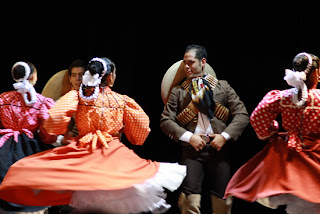
The Reception: Once the Mass is over, there is a grand reception in the honor of the girl who is now referred as Quinceanera. Generally, the Mexican girls are forbidden to dance in public events before entering pubescence. However, after the coronation, the girl is accompanied for her first dance by her father or her brother or any family relation or friend, who plays the role of a chamberlain. Before the dance, the flat shoes of the girl are replaced by a pair of heeled sandals, marking the transition of a girl to a woman. This dance is often known as the First Waltz. After the dance, a traditional Las Mananitas is sung by a Mariachi band at the time of quinceanera cake cutting, marking the celebration of the birthday with its special meaning. Quinceanera cake is the major highlight of the reception. The cake is usually a huge one that has staircase leading from one tier to another. At the top of the cake sits the girl's gift - A pretty quinceanera doll! The cake cutting ceremony is an eye-catching ceremony when a customary toast is raised for the well-being of the girl. Las Mananitas is also played when the girl leaves for the church or exits after the ceremony.

Banquet: After the cake cutting ceremony, people settle down for the delicious Mexican foods. One of the famous dishes of a quinceanera banquet is Picadillo. This is a rich dish made of ground beef and is often used as fillings for tamales and tacos. Main course dishes include Cabrito which is a young roasted goat. Chocolate sauces like Mole is added to many dishes served along with meat. Some famous desserts prepared in the quinceanera tradition are Arroz (a rich rice pudding) and Pan de polvo (short bread cinnamon flavored cookies). Champagne is the drink to be served for toasts! Hard drinks like liquor, beer and wine are also served.

Quinceanera Traditions in Puerto Rico
The social rituals of quinceanera tradition of Puerto Rico follow in the same lines of commemorating the womanhood in a female. In the olden times, the girl on turning fifteen was taken away from her family to enlighten her about her history, culture and traditions. The returning of the girl from her journey of new learnings was celebrated as her "coming of age".

Nowadays, the celebration is marked by religious ceremonies in Catholic Churches followed by a grand party. After the mass, the girl offers her last quinceanera doll or her bouquet as an offering to the Virgin Mary, shedding her childhood image. Also, a cross necklace is presented to the girl which is a sign of her vow to God to remain chaste until marriage. The girl is also gifted Bible and prayer books that bear the words - "Today you devote yourself to the Virgin [Mary], ask that Her Life act as a model for your existence. May this beautiful and pious act be a sweet reminder that will last forever."

The most joyous event of this occasion commences after the Mass. The father daughter dance, which is much awaited by all in the family, is the spectacular show of this occasion. This is the moment when the father presents his daughter to the world as a young woman. Most of the customs are similar to that of the Mexican quinceanera. Nowadays, the music of cacophonist banda, cumbia and salsa also add to the much anticipated festivity to the event.

Cuban traditions are similar to that of the Mexican and Puerto Rico customs. However, the dance in Cuban quinceanera traditions is a delight to watch, where the girl is surrounded by sixteen couples dancing in a choreographed group dance. This dance is usually led by a dancer of her choice or her boyfriend. The most common and traditional quinceanera gifts in all these Latino dominated countries include the tiara, cross necklace, Bible, rosary, scepter, ceremony pillows and a quinceanera doll. Accessories for this occasion include flower bouquets, cake decoration and server sets, reception cards and guest favors. Nowadays, girls also have a choice of trendy quinceanera hairstyles.

One of the interesting facts about the quinceanera tradition is that every facet of this event adds a sensuous beauty to a pretty fifteen year old. Quinceanera tradition is a big day in the life of a hispanic girl, who awaits for this day with a lot of happiness and anticipation, as this time comes just once in a girl's lifetime. This tradition of hispanic people is 400 years old but still carries the charm of the rich hispanic heritage and reminds every hispanic individuals their family bonds and culture of their forefathers.

Apr 28, 2012

Come And Read All About This Exuberant Diwali Festival


Diwali Festival
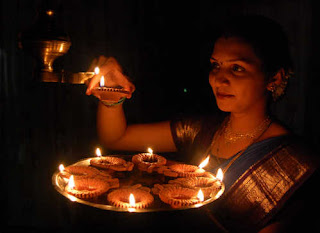
Although it’s still a few days away, the air is already electric with the impending exuberance and joy that is about to light up and burst all around us. Yes, like every year, around the latter part of October or the early part of November, this delightful festival of lights and bursting fireworks – we call them crackers here – is here again. One can hear sporadic crackers going off already all over the city, the streets are already lined with fire cracker shops with people, both young and old, thronging around them, strings of colorful lighting have already begun lighting up the streets, and the city streets are choked with traffic and people – everybody feverishly doing their Diwali shopping.

During this five-day long festival, thousands of rockets will go whizzing up into the dark sky and burst open in myriad showers of bright colors, children in every little lane, nook and cranny of cities, towns and villages will light up fire wheels - we call them charkas - and watch in glee as they dance round and round, ear deafening bombs will be set off, flower pots will bloom open in fountains of brilliant hues, the little ones’ eyes will sparkle as brightly as the sparklers they swing round and round, and long strings of electric firecrackers will be set off with their unending spitting and spewing. According to tradition, the custom of lighting up homes with diyas, or oil lamps, and lighting up the skies with fireworks during the Diwali festival are a way of expressing reverence to the gods in the heavens for bestowing prosperity, peace, knowledge, wealth, and health.

One of the most loved festivals of India, Diwali is celebrated with great jubilation and rejoicing all over the country, as well as by the substantive Indian diaspora that has spread all over the world. It is called the ‘festival of lights’ because it is the custom to place lighted diyas all around the house – on windowsills, doorways, roof-tops, verandahs, balconies, courtyards, gardens, on the outer walls – in fact, in every nook and cranny. Beautiful rangoli patterns are made on every doorstep along with patterns of little feet, depicting Lakshmi (or prosperity) entering the house. Being a celebration of the Lunar New Year as well as a harvest festival, Diwali is also imbued with powerful astrological significance and energies.

Apart from lighted lamps – these days replaced to a large extent by strings of electric lights – the festival of Diwali is also marked by exchanging sweets and gifts between family, friends, and these days, more and more as expensive corporate giveaways. New clothes are bought and worn, houses are spruced up, something new is bought for the house as a mark of auspiciousness, and traditional food and sweets are made and enjoyed with great gusto. Basically, it is the enduring renewal of life itself that is celebrated with the transitioning of the old lunar year into the new lunar year according to the Hindu calendar. The word ‘Diwali’ itself, derived from the Sanskrit ‘deepavali’, which means ‘a garland of lamps’ is a vivid depiction of this joyous festival that brings so much sparkle and merriment into everybody’s faces.

Befitting the great diversity that embodies India, with her innumerable languages, cultures, social mores, dressing styles, physical features of the people that inhabit this vast land, foods… the list is endless, really… so are Indian festivals. Hence, Diwali has different connotations in various parts of the country. While in North India Diwali is celebrated by burning effigies of Ravana, the demon king who Lord Rama defeated and then returned home victoriously to Ayodhya after 14 years of exile, to be crowned king, signifying the victory of the virtuous over the unrighteous, in the western state of Gujarat this festival is marked by honoring Lakshmi, who is the goddess of wealth.

For the Jains, the day of Diwali is a commemoration of Lord Mahavira (a great seer who is held in as much reverence in India as is Lord Buddha) passing into Nirvana – which in Hinduism, Jainism and Buddhism means reaching a state of such beatitude that it transcends the cycle of reincarnation, characterized by the extinguishing of suffering, desire and individual consciousness. The lamps of Diwali are lit as a way of substituting them for the extinguishing of the light of divine knowledge with the passing of Lord Mahavira.

In the eastern state of Bengal, Diwali coincides with the much-celebrated Kali Puja (puja is the act of showing reverence to the divine through rituals, prayers, songs, and invocations). According to the mythology of Hinduism, Goddess Kali was one of the incarnations of the Goddess Durga. Kali, depicted with a terrifying and fierce face, is the more aggressive manifestation of Durga. She is revered as the Mother Goddess who fights fiercely for justice and destroys all evil. Like in the rest of the country, Kali Puja too is marked by bursting firecrackers, lighting lamps, decorating the house with colorful patterns made at the doorstep, and elaborate puja carried out at midnight, through which people seek the blessings of the Goddess, prosperity, happiness, and protection against adversity.

In South India, Diwali is a commemoration of the defeat of Asura Naraka, a demon king. Legend has it that when Lord Krishna finally subdued him and asked him for his last wish before being killed, the demon king replied that he wished to enjoy his last day celebrating in a grand manner, and hence giving birth to Diwali being celebrated with lighted lamps, firecrackers, sweets, doorsteps of houses decorated with kolam patterns, made with colored powders, new clothes, and so on – a tradition that continues to date.

In whatever form Diwali may be celebrated, this unique festival is about light, noise, joy, ebullience, and mirth, bursting boisterously all around, all of which is rooted in the ancient culture of this land. And while there are sanctimonious nay-sayers who talk piously about the so-called "terrible commercialization" of the festival and moan about the "terrible noisiness" of the celebration, Indians being Indians – we will just go ahead and send off another salvo of colorfully noisy rockets into the Diwali sky and wish everybody – including the pious moaners and the sanctimonious nay-sayers – A Very Happy Diwali to You! May the Season bring Enlightenment, Joy, and Prosperity to One and All!

Apr 24, 2012

Mexico's Annual Cervantino Festival Is A Great Cultural Event


Mexico's Cervantino Festival
The International Cervantino Festival (Spanish: Festival Internacional Cervantino) is held every year in the city of Guanajuato, Mexico. The festival, which began in 1972, is loosely dedicated to the memory of Miguel de Cervantes, author of the famous Spanish novel Don Quixote of La Mancha. Guanajuato has adopted Cervantes and Don Quixote as representatives of the city, and statues dedicated to the author and his creation can be found around town. The Cervantino Festival is dedicated to Cervantes in spirit, and always involves a number of events related to Don Quixote, but the festival also includes much more.

Cervantino's International Atmosphere

At its heart, Cervantino is a cultural festival. It takes place each year during October, lasting a full month. Over the course of the month, hundreds of cultural events are held in the city, ranging from plays, dance, and musical productions to lectures, art galleries, and public art displays. The diverse, international nature of the festival makes it a popular tourism destination, especially for the Spanish-speaking world. Each year, one Mexican state and one international community are invited to be guests of honor at the festival, and attention is focused on the culture of those locales. In once recent year, the Catalonia, Spain and the Mexican state of Campeche held the honored spots.

You Don't Have to Speak Spanish

Because many of the events of Cervantino are in Spanish, the festival is not widely known in the United States and other places where Spanish is not commonly spoken. This is highly unfortunate, because the intent of the festival is, traditionally, to create an international atmosphere where people from around the world can come together and share their culture. Indeed, this is the atmosphere that prevails in Guanajuato during the month of Cervantino. Although many events are in Spanish, there are many others that require no specific language, such as visual art exhibits and musical performances. Furthermore, a few of the Spanish language performances, including plays, are subtitled in English and other languages, making the Cervantino Festival accessible to everyone.

A Great Time on Any Budget

Cervantino is consciously designed to be inclusive, and there are events to suit nearly everyone. Many of the events require tickets, which can be purchased in advance of the shows. Tickets are available online at the festival's website and in Guanajuato at designated ticket vending locations. Tickets are generally reasonably priced, with different price levels according to various factors. Not all of Cervantino's festivities require tickets, however, and visitors can have an excellent time for absolutely no money. Art exhibits, which change periodically over the course of the festival, are often free, and there are always a few performances open to the public free of charge. The best of these are often held outdoors, either at the city's outdoor amphitheater or in plazas and squares around town. No matter what your interests, exploring Guanajuato during the month of the festival can be an enriching, fun experience.

Plan Ahead

For those thinking of attending the next Cervantino festival, there are a few important things to keep in mind. First, the festival is extremely popular throughout Mexico, and the city becomes very crowded as a result. Hotels, hostels, and other accommodations can fill up weeks or months before the festival starts. Therefore, it's crucial to book your accommodations early, otherwise you might be stuck without a place to sleep, or forced to stay in a place that doesn't suit you because all other options are full. The same goes for tickets to events. Although there are usually plenty of tickets available during the festival, some of the more popular events or famous performers tend to sell out early, so you should consider buying tickets online well in advance of your trip.

Something for Everyone

If you have heard rumors that the festival is rowdy, you may want to give it a second look. In recent years, the government of Guanajuato and the festival's organizers have been trying to cut down on the party atmosphere, placing more emphasis on the cultural and international aspects. These days, Cervantino is truly a festival for everyone. Consider making Guanajuato, Mexico your travel destination next October.

Apr 17, 2012

Ganesh Chaturthi Is A Very Prominent Festival Of The Hindus

Ganesh Chaturthi is the birthday of Lord Ganesha. As per Hindu calendar, it is celebrated on the "shukla chaturthi" (4th day of the bright fortnight) in the month of Bhadrapada. Usually, this day occurs sometime between August 20 and September 15. The festival lasts for 10 days and culminates on the Ananta Chaturdashi. This is a very popular festival observed by Hindus throughout the world. It is also called "Vinayaka Chaturthi" or "Vinayaka Chavithi". Lord Ganesha or the elephant-headed god is the Lord of power and wisdom. He is the first to be worshipped during any prayer and his auspicious name is chanted before any work is begun.

Story of Ganesh Chaturthi
Once while Parvati, the consort of Lord Shiva, was bathing, she created a human figure, gave it life and asked to guard the door till she finished her bath. It so happened that Lord Shiva had completed a long span of meditation on Mount Kailash and desired to meet Parvati. However, he was stopped by the human created by Parvati at the door. Lord Shiva was infuriated and chopped off the human's head. Later, he discovered that the human was Parvati's son. To pacify Parvati, Lord Shiva ordered his attendants or "ganas" to procure the head of the first living creature they could find. Accordingly, they brought an elephant's head. Lord Shiva placed it on Parvati's son's body and brought it back to life. This day is celebrated as Ganesh Chaturthi. This elephant-headed god was named "Ganesha" or "Ganapati" which means "chief of the ganas".

Celebration of Ganesh Chaturthi
About a couple of months prior to Ganesh Chaturthi, clay models of Lord Ganesha are prepared. These may be 3/4th of an inch or more than 25 feet high. Every locality sets up its individual pandal. For this, voluntary and generous donations are procured from the members of the locality. Every pandal has a priest. Just before Ganesh Chaturthi, an idol of Lord Ganesha is purchased and brought to the pandal amidst fanfare and revelry. On Ganesh Chaturthi, the priest, dressed in red dhoti, performs "prana-pratishtha". It means infusing life into the idol. Then, the "shhodashopachara" or 16 ways of offering tribute are executed. 21 "modakas" (rice flour preparation), 21 "durvas" (trefoil blades), red flowers, coconut and jaggery are offered. On the forehead of the idol of Lord Ganesha, "rakta chandan" (red unguent) is applied. During this entire ceremony, shlokas (hymns) from the Rig Veda, Ganapati Atharva Shirsha, Upanishad and Ganesh stotra from the Narada Purana are chanted. Food (not containing onions and garlic) is cooked to mark this day.

The pandals are made attractive so that crowds throng to have their view during the 10 days of the festival. Some pandals have electrical lighting that sways as per the music or popular songs from Bollywood or other regional songs. Other depict some historical, political or mythological scene by using statues, which may be static or movable. Some may simply have some paintings portraying some event. One will unmistakably find a loudspeaker playing songs of various types. Particularly after sunset, a large number of people leave their houses to savor the ambience of these pandals. At least in big cities, this creates a traffic problem and necessitates the deployment of special traffic police to ensure that the movement of the masses is disciplined and no untoward incident takes place. "Aarti" (a ritualistic puja with hymns) is performed in the morning and the evening at every pandal. All the people in the locality around the pandal make it a point to attend at least the evening Aarti. On every occasion, Aartis of several gods are recited. Then, the devotees experience the heat of burning "kapoor" (camphor) placed on a plate, with their palms. They offer red flowers and "durva" grass and bow down before the Ganesha idol. Every day after each Aarti, a different "prasad" (small quantity of eatable) is distributed amongst all devotees.

Generally, after 12 noon on the Ananta Chaturdashi (10th day after Ganesh Chaturthi), all the Ganesha idols from the pandals line up on the roads. A procession of the idol is carried out. This is accompanied by singing, dancing and merrymaking. Eventually, the idol is immersed in a water body (river, lake or sea). Crowds sing quotes in the regional languages which mean "Lord Ganesha is returning to his home and hence we are uncomfortable" or "O Lord Ganesh! Come back early next year". This immersion procession continues for almost 24 hours. It ends around 12 noon the next day. The idol along with the garlands is immersed after a final Aarti.

Public celebration of Ganesh Chaturthi
Ganesh puja is a tradition in Maharashtra state since ancient times. However, it was Lokmanya Bal Gangadhar Tilak who began the practice of public celebration. It was in 1894, that he placed an idol of the Lord in Vinchurkar Wada in Maharashtra and started this practice. At this time, the social condition of the Hindus was unstable. They were not practicing their religion diligently and were not united. The supremacy of the Westerners suppressed their natural prowess. In such circumstances, Tilak started public Ganesh Chaturthi with the following aims:
  • to create awareness about Hindu religion
  • to nullify the feelings of animosity among people
  • to revive the good religious customs
  • to increase the awareness of the hidden prowess among Hindus
  • to make people realize their rights and duties
  • to start crusades that were essential at that point of time
Some famous pandals
Ganesh Chaturthi is very ornate in Maharashtra, Karnataka, Gujarat and Andhra Pradesh as these were parts of the former Maratha empire. Nevertheless, it is not only held in other parts of India but also outside India. In the city of Pune, there are five pandals called "Ganapati of Honor". These are "Kasba Ganapati", "Tambadi Jogeshwari", "Guruji Talim", "Tulsibaug Ganapati" and "Kesariwada Ganapati". The "Shrimant Dagdusheth Halwai Ganapati Mandal" and "Akhil Mandai Mandal" are a seat of tremendous reverence for crores of worshippers throughout the world.

Peril of modern Ganesh Chaturthi
Earlier, the idols were made of "shaadu mati" or earth/natural clay and did not evoke any criticism. However, with time plaster of Paris replaced shaadu mati as it was easier to mold, lighter and cheap. After immersion, plaster of Paris requires more time to dissolve and also releases toxic elements in the water bodies. Additionally, chemical paints are used to enhance the aesthetic look of these idols. These paints contain mercury and cadmium. On the day of immersion, thousands of these idols are submerged in the water. This causes a raise in the acidity and heavy metal content of the water. As a result, several fish perish in these water bodies.

Apr 9, 2012

Amazing Brazilian Carnival Is The Globe’s Most Spectacular Party

The spirit of camaraderie, the depth and vibrancy of Brazilian culture and the very best in music and dance are illustrated to the world at the Brazil Carnival.

Get ready for Brazil Carnival. Rio de Janeiro is the mother of all Carnival celebrations in Brazil. But there's also much fun in the streets of Recife and Olinda. Decide to follow one of the Trio Eletricos in Salvador de Bahia and you will have a blast. What about Sao Paulo with its every year more popular and always affordable parades? But you can't do it all in one year, can you? Learn it all here.

Bahian superstar Carlinhos Brown says, "We play, not for money, but to celebrate happiness. Our carnival is a street carnival. It is for everyone, not just for those with money." The carnival is one of the most celebrated festivities of Brazil. Brazil's carnival culture has spilled out of its boundaries and has taken the world by storm.

History
The carnival has taken its roots from the ancient Greek spring festival of honoring Dionysus, the god of wine. The Romans adopted the festival, which later, the Roman Catholic Church changed to suit its own religious needs. The Brazilian Carnival is an annual festival, celebrated four days, preceding the Ash Wednesday. It has a religious flavor, as it marks the beginning of the fasting days of 'Lent'. Carnival literally means to remove meat, one of the important observance to be followed during Lent, while practicing repentance, to honor the death and resurrection of Christ. The Carnival is celebrated on different scales all over Brazil. A lot of time and effort is involved in its preparation. Each place has its own distinct style. Among the many interesting aspects of the Carnival, King Momos deserves a mention. He is considered as the 'King of Carnivals' and signifies the beginning of the festivity.

Rio de Janeiro Carnival
Rio de Janeiro, the cultural capital of Brazil, has parades since the 1930s. Presently, it holds the parade in a large permanent structure called 'Sambadrome'. The Carnival parade is full of participants from various samba schools. The parade serves as means to compete with other schools, resulting in a visual treat. The group or blocos as they are known, parade through the city telling short stories through their music, dances and costumes. The winners are announced at the closing of the carnival.

Bahia Carnival
The music and dance of the Bahia parade are heavily influenced by the African heritage. It's held in the city of Salvador, also known as the 'Capital of Happiness'. Their parades combine the samba and reggae rhythm, using giant speakers mounted on a truck and a platform for the artist to perform called trio-elétrico.

Pernambuco Style
The Carnival is held at 'Pátio de São' Pedro Square in Recife, Brazil. It's unique in many aspects. They do not have any competitions, instead perform side by side. The Galo da Madrugada is the biggest carnival parade in the world. Their dance style is acrobatically influenced with frequent arm and leg movements. The main rhythms used are the frevo and maracatu.

Minas Gerais Style
The Carnival is influenced by Rio de Janeiro and Bahia style. It fuses the themes and adds to it, its own unique music of drums and bands. The important carnival parades in Minas Gerais are mainly held in the historic cities of Ouro Preto, Mariana and Diamantina.

Costumes
The costumes and mask are of extreme importance, as they depict their own story. Their creation requires a high level of understanding of the roles they are meant to play. Like music, even the costumes are influenced by the African heritage. Fabrics of different textures, mostly adorned with feathers and sequins, are used. While designing such elaborate costumes, the freedom of movement to the dancers is an essential aspect. Carnival make-up, creates an enchanting persona.

Food
No carnival is complete without the Brazilian national dish, Feijoada, a pork and bean stew. Streets are full of food, cooked either in houses or restaurants. The cuisines differ from place to place with each adding its unique flavor to its carnivals. Dancers often eat light meals, but enjoy the full course after the parade is over. Drinks are equally important, to beat the heat. Brazilian soda 'Guaraná' and beer are the preferred choices.

A carnival goes beyond providing entertainment, it reflects the culture for the world to see and appreciate. The Brazilian Carnival rejoices life, it spreads euphoria through its dance, song, music, food and people.